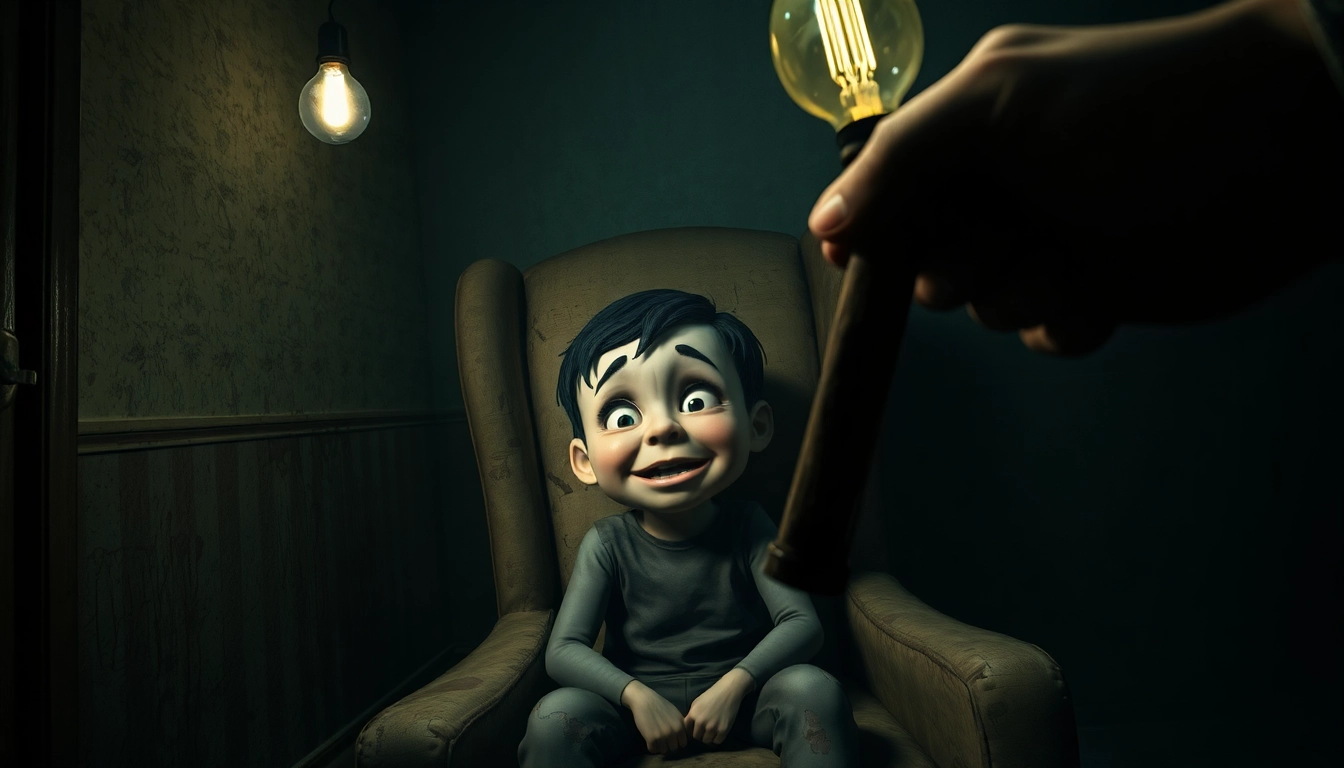
Overview and Context: BLOODMONEY – A Psychological Horror Clicker Experience
In the realm of indie horror and psychological thrillers, bloddmoney game stands out as a disturbing and thought-provoking dark clicker game that challenges players’ moral boundaries. This game immerses players into a bleak narrative where every click not only generates vital funds but also progressively deteriorates the moral fabric of the protagonist and Harvey, the cheerful character at the center of this unsettling experience. As players navigate through a series of increasingly disturbing choices, BloodMoney offers a visceral exploration of human nature, desperation, and the cost of survival in a world veering toward moral decay.
The Dark Narrative of BloodMoney and Harvey
The Premise and Setting
BloodMoney plunges players into a dire situation: you have been diagnosed with a serious, life-threatening condition requiring an urgent $25,000 for treatment. With time running out and options dwindling, an unusual opportunity arises. Enter Harvey, a seemingly innocent and cheerful character who offers a disturbing yet tempting method to earn money: clicking on him. This bizarre mechanic sets the stage for a dark exploration of morality under duress. The game’s narrative cleverly employs subtle visual and dialogue cues to evoke empathy for Harvey, contrasting sharply with the sinister shop that offers increasingly violent tools. The juxtaposition between Harvey’s innocence and the brutality of the upgrades forms the core tension of the story, prompting players to question what they’re willing to sacrifice for survival.
Harvey: The Innocent Facade
Harvey appears as a friendly, upbeat figure, seemingly unaware of the sinister nature of the tools available in the shop. His surprise at the more violent weapons—such as hammers or needles—implies that he might not fully understand what’s in the shop or the true purpose behind these tools. This detail adds a layer of moral complexity, as players might wonder: Is Harvey an innocent victim like themselves, or a pawn in a darker game? The narrative subtly suggests that Harvey is a reflection of innocence trying to help, yet trapped in a system that corrupts him as the game progresses. The emotional weight intensifies as Harvey’s reactions become more pained and fearful, highlighting the game’s ability to evoke genuine empathy and discomfort simultaneously.
Gameplay Mechanics and Player Choices
Clicking Mechanics and Earning Money
The core gameplay revolves around clicking on Harvey to generate income. Each click adds a dollar to your total, bringing you closer to your critical $25,000 goal. The mechanics are simple but effective, using a loop that gradually becomes more intense as the visual and auditory cues heighten the emotional impact. The more you click, the more Harvey suffers, with visual cues such as pain grimaces, trembling, or increasingly distressed expressions. These design choices serve to immerse players in Harvey’s suffering, blurring the lines between gameplay and emotional engagement.
Upgrade System and Increasing Violence
As your funds increase, the shop unlocks tools that can be purchased to boost earnings. Initially, these are innocuous, like pillows or soft objects, but quickly escalate to more violent implements such as needles, scissors, and hammers. Each upgrade not only amplifies the money earned per click but also deepens Harvey’s torment. The game’s design cleverly ties the visual and psychological effects to these upgrades, with Harvey’s appearance growing more distressed and fragile as violence intensifies. The upgrade system introduces a risk-reward dynamic: do you prioritize maximum profit, regardless of Harvey’s suffering, or do you seek to minimize harm? This tension is at the heart of the game’s moral dilemma.
Multiple Pathways and Moral Choices
BloodMoney offers multiple pathways, allowing players to choose between different approaches to maximize their earnings. For instance, some players may opt for minimal harm, purchasing only harmless upgrades, while others might prioritize aggressive violence to reach their goal faster. These choices have profound consequences on the narrative’s progression and the endings you unlock. The game subtly tracks your decisions, influencing the final outcome and revealing the complex moral landscape that players navigate.
Visual and Emotional Design Strategies
Creating a Disturbing Atmosphere
The game masterfully employs visual cues, such as Harvey’s facial expressions, body language, and subtle animations, to evoke empathy and discomfort. As Harvey suffers more, his reactions become more pronounced—trembling hands, widened eyes, tears—drawing players into his emotional state. The background and lighting also shift subtly, becoming darker and more oppressive as the game progresses, reinforcing the sense of psychological horror.
Sound Design and Dialogue
Complementing the visuals, the sound design enhances the unsettling atmosphere. Soft, cheerful music at the beginning gradually transforms into discordant, tense soundscapes as violence increases. Harvey’s dialogue evolves from cheerful banter to expressions of fear and pain, further immersing players in his suffering. These auditory cues are essential in amplifying the emotional weight of each decision, making the moral consequences resonate deeply.
The Impact of Upgrades and Increasing Violence
Tools and Their Visual Consequences
The shop offers a variety of tools that escalate in brutality: from needles to scissors, to hammers and beyond. Each purchase results in more graphic and disturbing visuals, illustrating Harvey’s increasing pain and deterioration. The game’s art style leverages subtle but disturbing imagery, such as Harvey’s skin tearing or blood splatters, to evoke visceral reactions. These visuals are carefully balanced to maximize emotional impact without overwhelming the player, maintaining a haunting aesthetic that underscores the moral gravity of the choices.
The Psychological Consequences
Beyond the visuals, the game explores the psychological toll on the player. The more violent the upgrades, the more Harvey’s reactions become visibly distressed, and the more emotionally taxing the experience feels. Players report feelings of guilt, discomfort, and even helplessness, as they realize that their pursuit of survival directly correlates with Harvey’s pain. This design encourages reflection on real-world moral compromise and the human capacity for cruelty when faced with dire circumstances.
Multiple Endings and Moral Outcomes
The Three Main Endings
BloodMoney culminates in three distinct endings, each reflecting the player’s moral choices during the game:
- The Good Ending: Achieved by minimizing Harvey’s suffering, avoiding violent upgrades, and reaching the financial goal through small, less harmful means. Harvey’s reactions are relatively mild, and the ending emphasizes compassion and moral integrity.
- The Normal Ending: Reached by balancing earnings with moderate violence, using tools like scissors or needles. Harvey’s suffering is noticeable but not extreme, leading to a more ambiguous moral conclusion.
- The Bad Ending: Attained by maximizing violence—using hammers or other brutal tools—causing Harvey significant pain and distress. This ending explores themes of moral decay and the destructive nature of greed and desperation.
Each ending provides a different perspective on morality, human nature, and the cost of survival, prompting players to reflect on their choices and their implications.
Community Reactions and Interpretations
Player Discussions and Theories
The BloodMoney community is vibrant, with players dissecting the game’s symbolism and moral messages. Many interpret Harvey as a symbol of innocence lost, representing how desperation can corrupt morality. Others debate whether the game is an indictment of human nature or a psychological test of empathy and cruelty. Reddit threads and YouTube analyses often highlight how subtle cues—like Harvey’s surprised reactions to violent tools—add layers of meaning, emphasizing the game’s depth beyond its simple clicker mechanics.
Emotional Impact and Personal Reflection
Players frequently report intense emotional reactions, including guilt and discomfort, especially when opting for the more violent pathways. Some describe feeling genuinely disturbed, questioning their own morals and the nature of survival. The game’s ability to evoke such responses underscores its effectiveness as a psychological horror experience, making it more than just a game—it’s a moral mirror that confronts players with uncomfortable truths about human behavior.
Psychological Themes and Ethical Questions
The Duality of Human Nature
BloodMoney explores the thin line separating innocence from brutality. Harvey embodies the potential for good, while the shop’s increasingly violent tools symbolize the darker impulses within humanity. The game prompts players to examine their own morality: How much are they willing to sacrifice their ethics for survival? Is it possible to maintain compassion in a world driven by survival instincts? These questions resonate deeply, making BloodMoney a compelling reflection on human nature.
Morality Under Pressure
The game’s core mechanic—clicking on Harvey—serves as a metaphor for actions taken under extreme pressure. Each decision, whether to buy a violent upgrade or to hold back, parallels real-world choices faced in desperate situations. The narrative suggests that morality is fluid, and that circumstances can push individuals toward actions they might not normally consider. The multiple endings reinforce that morality is subjective, shaped by personal values and situational factors.
Comparative Analysis: BloodMoney and Other Dark Clicker Games
Compared to other dark-themed clicker games, BloodMoney distinguishes itself through its emotional depth and moral complexity. While titles like “Clicker Heroes” or “AdVenture Capitalist” focus on lighthearted or purely profit-driven gameplay, BloodMoney immerses players in a disturbing moral landscape. Its focus on psychological horror, subtle visual cues, and the moral weight of decisions set it apart as a unique experience. It echoes themes found in psychological horror classics, such as “Silent Hill” or “PT,” but through the lens of interactive gameplay, making it an innovative addition to the genre.
Final Thoughts: Morality, Survival, and Human Nature
BloodMoney challenges players to confront uncomfortable questions about morality, desperation, and the human capacity for cruelty. The game’s design—combining simple clicking mechanics with intense emotional and visual storytelling—creates an immersive experience that leaves a lasting impression. It forces players to reflect on how far they are willing to go when their own life is at stake, highlighting the fragile boundary between good and evil.
Ultimately, the game’s multiple endings serve as a mirror for our own moral choices: Will we choose compassion, compromise, or cruelty? The game’s subtle yet powerful storytelling, paired with its disturbing visuals, makes it a compelling study of human nature and ethical boundaries. For those interested in exploring the darker side of morality through interactive art, blood money game harvey offers an unforgettable journey into the depths of psychological horror and moral ambiguity.