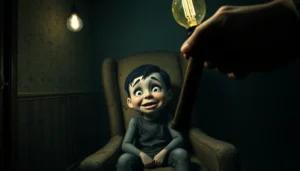
Overview and Context: BLOODMONEY – A Dark Psychological Clicker Experience
In the realm of indie horror games, few titles manage to evoke such a profound sense of moral discomfort and psychological tension as blood money. This game immerses players in a disturbingly visceral journey where each click not only generates monetary profit but also chips away at the moral fabric of the protagonist—and, by extension, the player. Unlike traditional horror or survival games, BLOODMONEY leverages minimalist gameplay mechanics—primarily clicking—to craft a deeply unsettling narrative that explores human nature, morality, and desperation. It challenges players to confront the question: how far are you willing to go when your own life hangs in the balance? The game’s premise revolves around a character diagnosed with a serious medical condition, desperately needing $25,000 for treatment, and presented with a morally ambiguous option: click on a cheerful, seemingly innocent character, Harvey, to earn money, knowing that each interaction causes him pain and suffering. This unconventional setup pushes players into a dark psychological space, forcing them to weigh the cost of survival against their moral boundaries.
Game Mechanics: Clicking, Upgrades, and The Visual Horror
BLOODMONEY’s core gameplay is deceptively simple—players click repeatedly on Harvey to accumulate money. Each click results in a small payout, but as the game progresses, the reward per click increases dramatically through upgrades purchased from the in-game shop. The more aggressive the upgrades—such as hammers, needles, or other disturbing tools—the higher the earnings, but at a significant moral and visual cost. The upgrade system introduces a layered risk-reward dynamic: players can choose to maximize profits at the expense of Harvey’s suffering or opt for a more restrained approach, minimizing harm. This mechanic is complemented by visual cues that grow increasingly grotesque; Harvey’s appearance and reactions subtly change with each click, becoming more distressed, fearful, or even physically altered, depending on the upgrades selected.
The clicking mechanic is not just a means to an end but a vehicle for emotional and psychological immersion. Subtle visual and audio cues—like Harvey’s grimacing face, tears, or involuntary movements—serve to heighten the sense of unease. As the game advances, the visuals turn more disturbing, with blood, wounds, and unsettling imagery becoming more prominent, pushing the player to confront the moral implications of their actions. The game’s design cleverly employs minimalistic yet effective visual storytelling, ensuring that even the simplest actions carry profound emotional weight. The upgrade system allows players to tailor their approach, choosing between tools that are less violent, like scissors or pillows, and more brutal options like hammers or knives, each with its own moral and visual consequences.
The Dark Narrative of BloodMoney and Harvey
Harvey’s Role and The Desperate Fight for Money
At the heart of BLOODMONEY is Harvey—a cheerful, seemingly naive character who acts as both the catalyst and the symbol of innocence lost. Initially, Harvey appears to be a benign, helpful figure, offering a simple way to earn money through clicks. However, as players delve deeper, subtle hints suggest Harvey might not fully comprehend the extent of the shop’s offerings. For example, Harvey’s surprise at more violent tools like hammers or needles implies he expects benign items, possibly for harmless purposes like pillow fights. This discrepancy introduces an unsettling layer: is Harvey truly aware of what he’s being subjected to, or is he a pawn in a darker, unseen force? The narrative cleverly blurs the lines between innocence and manipulation, making players question the morality of their actions and Harvey’s suffering.
The game vividly portrays Harvey’s transformation—from a cheerful companion to a figure overwhelmed by pain and fear—as a mirror to the player’s choices. The more aggressive the upgrades, the more Harvey’s visual and emotional state deteriorates, culminating in a disturbing tableau of suffering. The game’s narrative explores the theme of exploitation and the moral decay that accompanies desperation. The protagonist’s plight—being diagnosed with a life-threatening condition—serves as a stark reminder of how dire circumstances can push individuals toward morally questionable decisions. Harvey, in this context, becomes both a victim and a mirror for the player’s own moral boundaries.
The Desperate Situation and Harvey’s Proposition
The narrative tension peaks as players race against time to gather the $25,000 needed for medical treatment. Harvey’s proposition—clicking to generate money—initially seems simple and harmless. Yet, as the game progresses, the tone darkens. The cheerful facade fades, replaced by an atmosphere thick with dread. The shop offers increasingly violent tools to maximize earnings, such as knives and hammers, which escalate Harvey’s suffering. This progression forces players to confront a moral dilemma: do they prioritize their survival at any cost, or do they attempt to minimize Harvey’s pain? The game subtly hints that Harvey may not fully understand what’s happening—his surprise at violent tools suggests a layer of innocence or ignorance, adding psychological complexity to the moral calculus.
Ultimately, the narrative challenges players to reflect on their own morality, as every click and upgrade choice influences Harvey’s fate and the ending they will unlock. The game’s storytelling is enhanced by its minimalist dialogue and visual cues, which collectively evoke a haunting atmosphere of helplessness and moral ambiguity.
Multiple Pathways and Endings: The Consequences of Choice
The Three Endings – Good, Normal, and Bad
BLOODMONEY’s branching endings hinge on the player’s approach to the moral dilemma. Three distinct conclusions—The Good Ending, the Normal Ending, and the Bad Ending—serve as a moral roadmap, illustrating the consequences of choices made during gameplay.
- The Good Ending: Achieved by minimizing Harvey’s suffering, avoiding the most violent tools, and opting for the least harmful upgrades. This path reflects a moral stance prioritizing compassion and restraint, even when faced with desperation. Harvey’s appearance remains relatively intact, and his reactions show less distress. The game concludes with Harvey’s relative recovery or a sense of moral redemption, leaving players with a somber but hopeful message about human kindness amidst adversity.
- The Normal Ending: Attained through a balanced approach—using some more aggressive tools like scissors but avoiding the most brutal options. Harvey’s suffering is moderate, and his reactions display a mixture of pain and resignation. The ending hints at the moral compromise made, and while some empathy remains, the player is faced with the cost of their decisions.
- The Bad Ending: The result of maximizing profit regardless of Harvey’s suffering, often involving the use of violent upgrades such as the hammer or knife. Harvey’s visual state is grotesquely altered; his responses are of pure agony. The final scenes are disturbing, emphasizing moral decay and the loss of humanity. This ending starkly illustrates the consequences of surrendering morality for survival, leaving players to grapple with guilt and reflection.
These endings not only serve as gameplay milestones but also provoke deep introspection about moral boundaries, human empathy, and the nature of survival.
Community Insights and Hidden Depths
Players from around the world have shared their experiences and insights about BLOODMONEY, uncovering layers of symbolism and psychological complexity. Many note that Harvey’s reactions and visual cues subtly change based on their choices, revealing a game that tracks morality in a nuanced way. Observant gamers have pointed out that Harvey’s surprise at violent tools suggests he might be unaware of what’s in the shop, hinting at a potential manipulation by darker forces or the game’s unseen narrative layer.
Some community members speculate that Harvey symbolizes innocence or humanity itself, trying to help but ultimately exploited. The game’s minimalist storytelling encourages players to read between the lines, discovering hidden details in dialogue, visuals, and sound design. These insights deepen the emotional impact and reinforce the game’s themes of morality, guilt, and human nature.
Furthermore, players have experimented with different upgrade combinations, discovering that even using seemingly “harmless” upgrades like scissors can lead to a good ending, depending on their choices. This reveals that the game subtly monitors not just the tools used but also the overall moral intent behind the gameplay—an intricate moral audit that adds replayability and depth.
The Broader Message: Morality, Survival, and Human Nature
BLOODMONEY is more than a simple horror-clicker game; it’s a psychological mirror reflecting the complexities of human morality under duress. It poses uncomfortable questions: How much suffering are we willing to inflict for our own survival? Does the end justify the means? The game’s narrative does not offer easy answers but instead immerses players in a moral grey area, forcing them to confront their own boundaries.
Harvey’s innocence contrasted with the increasingly violent upgrades highlights the duality of human nature—our capacity for kindness and cruelty coexisting within us. The game suggests that in desperate situations, morality often becomes a matter of perspective and choice. It challenges players to consider whether they can maintain their humanity when pushed to the brink or whether survival instinct inevitably leads to moral decay.
This exploration of human psychology resonates beyond the game, echoing real-world dilemmas faced in crises, war, and survival scenarios. BLOODMONEY’s unsettling atmosphere and moral complexity make it a compelling case study on the human condition, wrapped in a visceral horror experience.
Comparison to Similar Games and the Rise of Psychological Horror Clickers
In recent years, the gaming industry has seen a surge in psychological horror titles that blend minimalistic mechanics with profound storytelling. BLOODMONEY stands out as a pioneering example, combining simple clicking gameplay with complex moral and emotional layers. Its emphasis on visual storytelling, subtle cues, and player choice aligns with the aesthetic and thematic trends seen in titles like “The Cat Lady,” “Silent Hill,” and “Layers of Fear,” but with a unique twist that emphasizes moral decision-making.
Unlike traditional horror games that rely heavily on jump scares or combat, BLOODMONEY’s slow buildup of dread and moral tension creates a different kind of psychological impact. The game’s minimalist design makes every click meaningful, and the escalating grotesqueness of Harvey’s suffering emphasizes the moral stakes. This approach has inspired a new genre of psychological horror clickers—games that use simple mechanics to explore complex human themes, fostering introspection and emotional engagement.
Furthermore, BLOODMONEY’s community-driven discoveries and multiple endings reinforce its depth, encouraging players to experiment with different choices and reflect on their morality. Its success demonstrates a growing appetite for indie titles that challenge conventions and provoke thought as much as they entertain.
Conclusion: When Morality Meets Desperation – The Reflection on Humanity
At its core, BLOODMONEY is a haunting exploration of the thin line between morality and survival. It forces players to confront uncomfortable truths about human nature—how easily innocence can be lost and how moral boundaries are tested under extreme circumstances. The game’s minimalist yet emotionally charged design ensures that every decision carries weight, and every click brings consequences that ripple through Harvey’s fate and the ending that awaits.
This psychological horror game is a mirror of our own moral choices, reflecting the darker aspects of humanity that surface in moments of crisis. Its narrative and gameplay mechanics serve as a powerful reminder: in the fight for life, the true cost may be our own morality. As you navigate the twisted world of BLOODMONEY, remember that your choices define not only Harvey’s future but also the reflection you see in the mirror of your conscience.
For those intrigued by this unsettling journey, exploring blood money offers a stark, thought-provoking experience that challenges the very essence of human morality and survival instinct. When morality meets desperation, what are you willing to sacrifice? The answer lies within your choices—an indelible reminder of the darkness and light that reside in us all.